water element
You are only as young as your spine is flexible.
Joseph Pilates
Water connects us to essence, deeper meaning, and authenticity. Beneath its surface run mysteries of time and space — currents that move through all of life. Like the Winter season it corresponds to, Water invites us to reflect: what is quietly growing, even if not yet visible?
Water shows up as a raging river, a still pond, a roaring waterfall, a single raindrop, an ocean's tide, a slow clear stream — each one true, powerful, and fully alive in the moment.
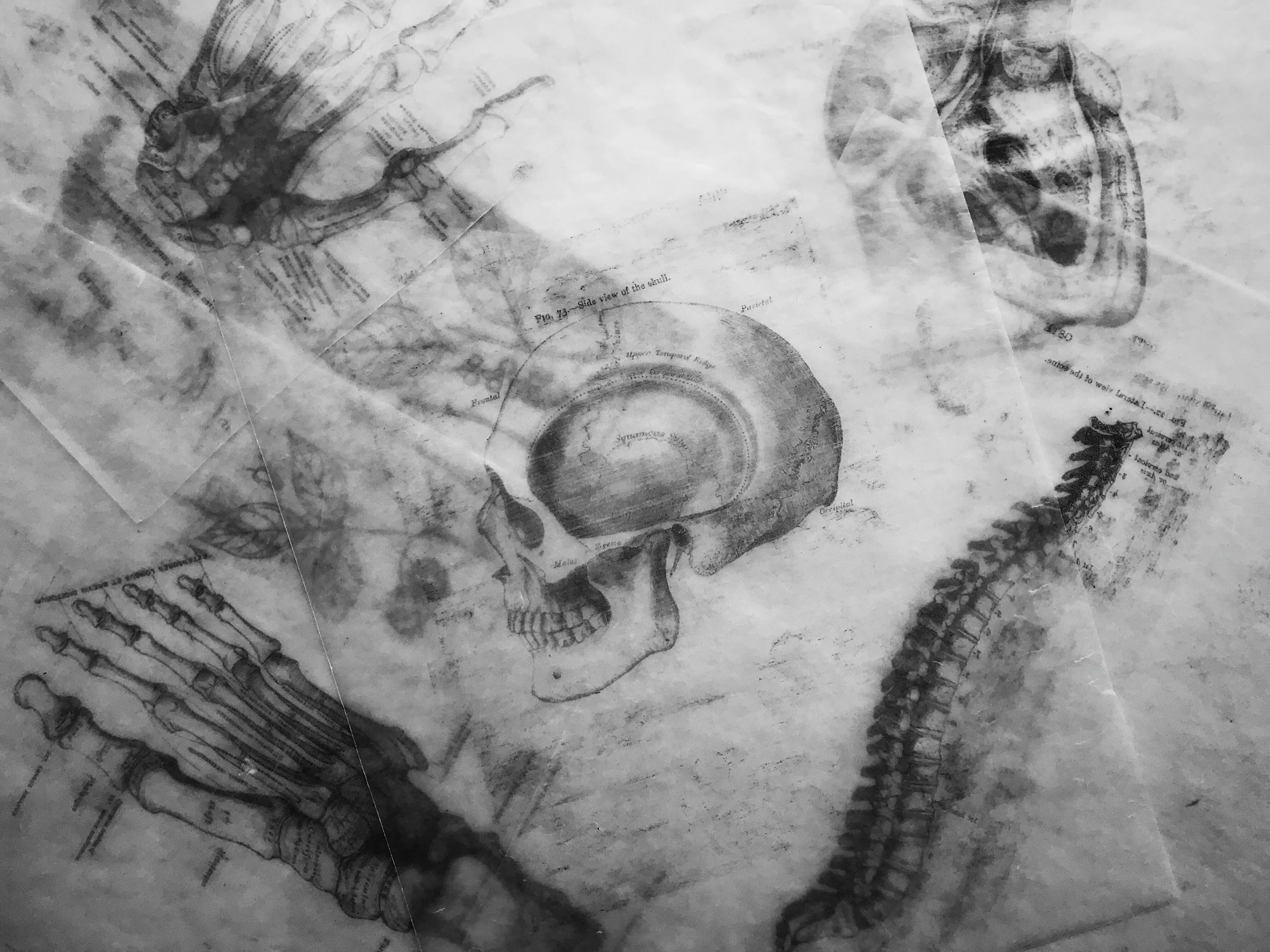
The Water element houses the kidneys and the mingmen fire, our constitutional reserves of qi. And the kidneys govern the bones.
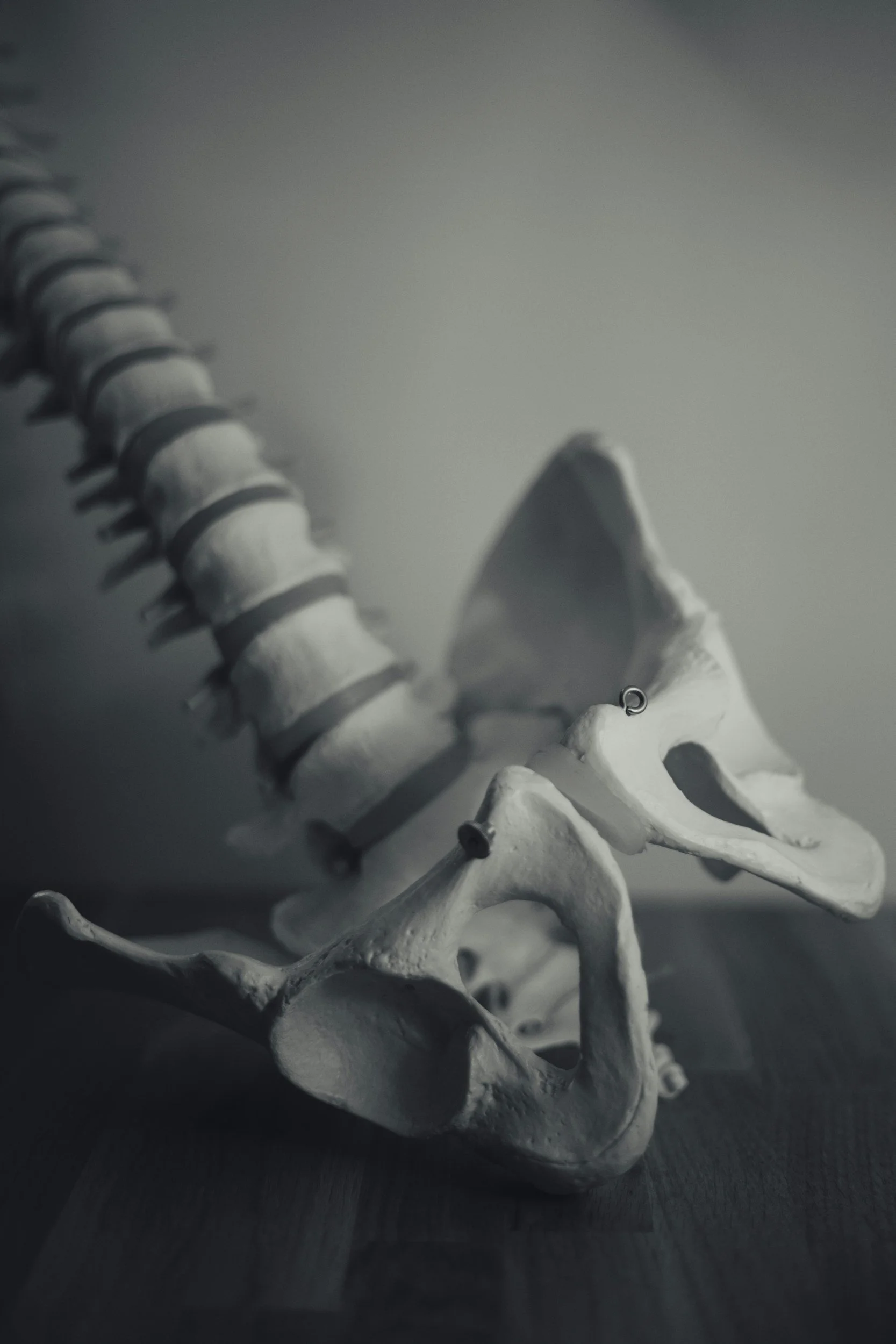
Our vitality - our ability to live with “spontaneous zest and pleasure” - has to do with both the strength and suppleness of our spine. I’m speaking to the beautiful relationship between Fire and Water.
The intricate web of nerves running throughout the spine to every endpoint, including the brain, is nothing short of magical.
What we feel, our senses, our expression, how we move through the world, how we find flow… all stems from the spine.
Furthermore, in Chinese Medicine, the spirit of the spine and the bone health (the kidney and bladder systems) is the will - called Zhi.
Zhi is our will to live. Our Zhi is our why, our intuition and self-trust, our true essence and inner knowing.
The meridian systems of the Water Element run our entire backside. The posterior chain. The hammies, the glutes, the erectors. All that keeps us upright and propels us forward.
As Joseph Pilates said so well, we are only as young as our spine is flexible. As Pilates teachers we help the client build spine range intentionally. Often, but not always, we build spine movement and flow in this progression
flexion : like half roll downs, spine stretch forward, stomach series exercises, and the c-curve that becomes horse.
flat back elongation : finding lift and length without an arch, like flat back on the short box, more effective planks, or even a long spine during footwork on the reformer. we look at how to stand up or sit up with lift, elongation.
extension : from the length we extend, finding safe and subtle backbends at first in exercises that prep swan, like single-leg and double-leg kick on the mat, or pull and T straps on the reformer. then extensions grow with backside roots.
side bend : moving in lateral space through exercises that ignite the side body, mermaids and side sit-ups. when we get into lateral space we find the activation of the arms and legs meeting the middle (arms into back + legs into waist).
twisting : with so much length we can safely rotate and twist. rooting and lifting both, and feeling into the tight places.
combining two or three or all of the above : yes, then we combine any of these into one movement in various planes of space. it gets more complex, and it also is more realistic for the true movements that happen in our dynamic lives.
I teach the Basic System through what I call the 4 Foundations of Movement.
The 4 Foundations of Movement : Frame, Powerhouse, Opposition, Flexibility.
The goal is an integrated strength and flexibility for the client, a pain-free spine and a feeling of comfort and freedom in their body ~ which looks and feels unique to the individual, but is freedom nonetheless.
The highest good is like water,
Water is good at benefiting the ten thousand things,
And yet does not contend with them.
It dwells in places the multitudes detest,
Therefore, it is close to the dao.
~ Dao De Jing
On healing…
The potential for movement, freedom, flow, ease, and healing is available. Sometimes people aren’t ready to heal or to move a certain way, but we may offer up the invitation again and again. We can use the whole room of apparatus to build towards an exercise.
Healing happens physically, emotionally, consciously, or not consciously… Healing doesn’t often look like what we think it is. Sometimes it happens very slowly and then all at once. And most of the time I think it’s best to empower the client to own their healing journey. We can also agree that pain sucks. And if pain is stagnation, and we are artists of movement, we can very likely help.
We, as teachers, hold available the infinite potential of the moment, for the person in front of us, and we have to remember it is their journey, their healing, their timing, and we aim to not be attached to our own vision of ‘right’ outcome.
I often remember from Lao Tzu, “who’s to say what is right and what is wrong?” I think also, who’s to say what healing and freedom looks like? I’d like more than anything to give it to the client. Teach them in a way that they own their workout and that they value their ability to ‘tune in’ to their body in the present moment.
Change happens through movement, and movement heals.
So, what do we do when there is pain, stagnation, and we need help? Chinese Medicine adjunct treatments.
CUPPING
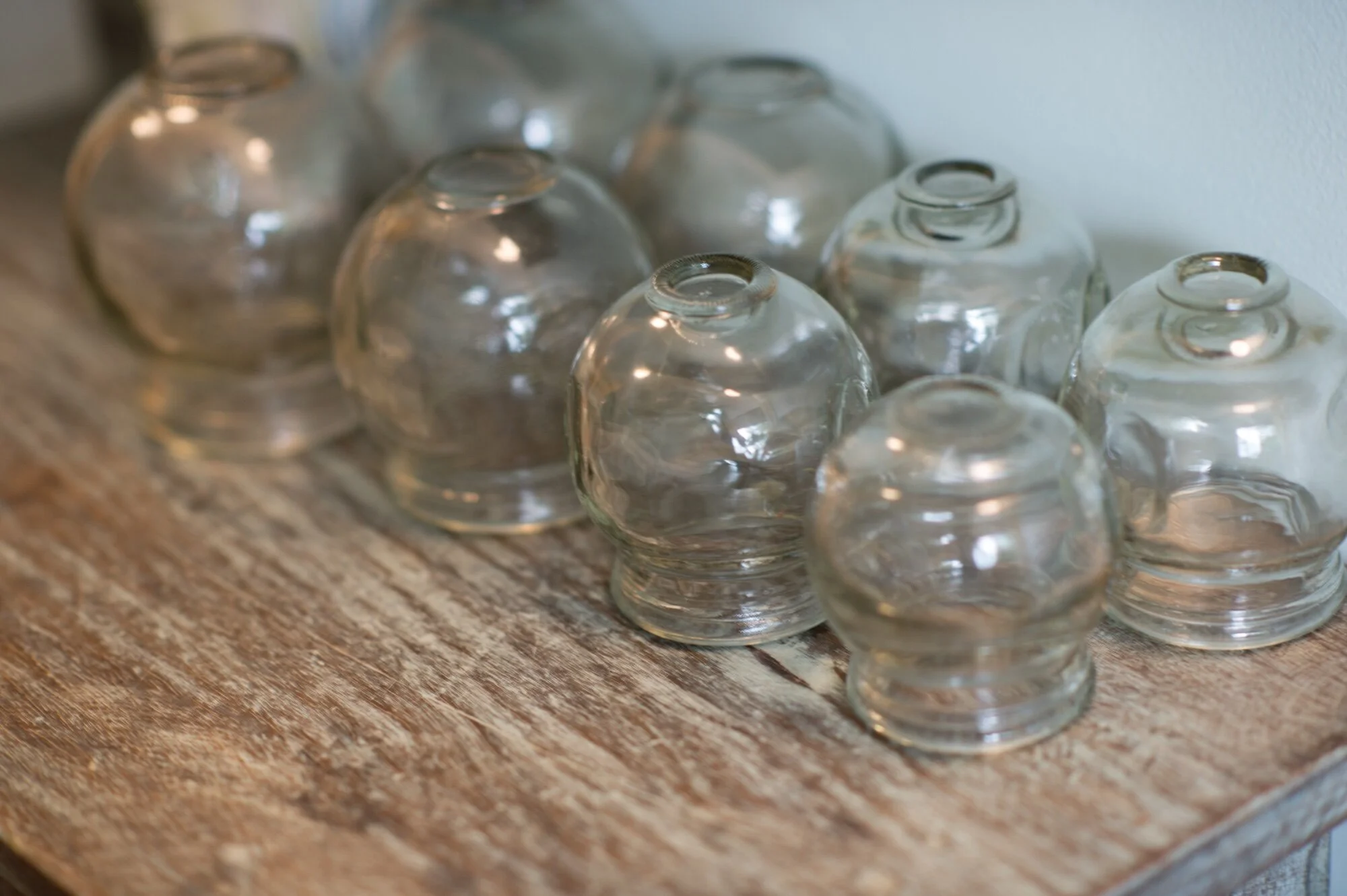
Cupping is an adjunct therapy used in Chinese Medicine to help move qi, nourish qi, harmonize the blood and/or release the exterior. All fancy ways of saying cupping both builds reserves and helps to move tight and stuck places. Cupping can be done all over the body, using either glass cups and the vacuum suction of a flame, plastic pump cups, or silicone flexible cups. It’s something like a pulling sensation over muscles and sinews. Cups can be left stationary or slide with oil on the skin creating a massaging action.
When cups leave marks on the body, pink or red or purple circles and patterns, this coloring tells about the range of stagnation. The darker and more purple dense coloring, the deeper and often more long term the stagnation. The coloring lightens over the following days and this process is even part of the healing work. In truth it’s good to know that the discoloration is not bruising.
A bruise is defined as blood leaving the cells because the cell walls have been damaged, as from an impact or trauma. In the case of cupping (as well as gua sha) the cell walls are not damaged or broken, but the blood does exit and then get reabsorbed. A natural way for the body to cleanse, heal, move and regenerate fresh qi and blood.
GUA SHA
As with cupping, gua sha is all about flow and movement. Gua sha is also very much a way of tonifying qi - aka helping the body get stronger, more turned on, function optimally, communicate openly all without draining resources. In some ways you could say that it calls the body into action.
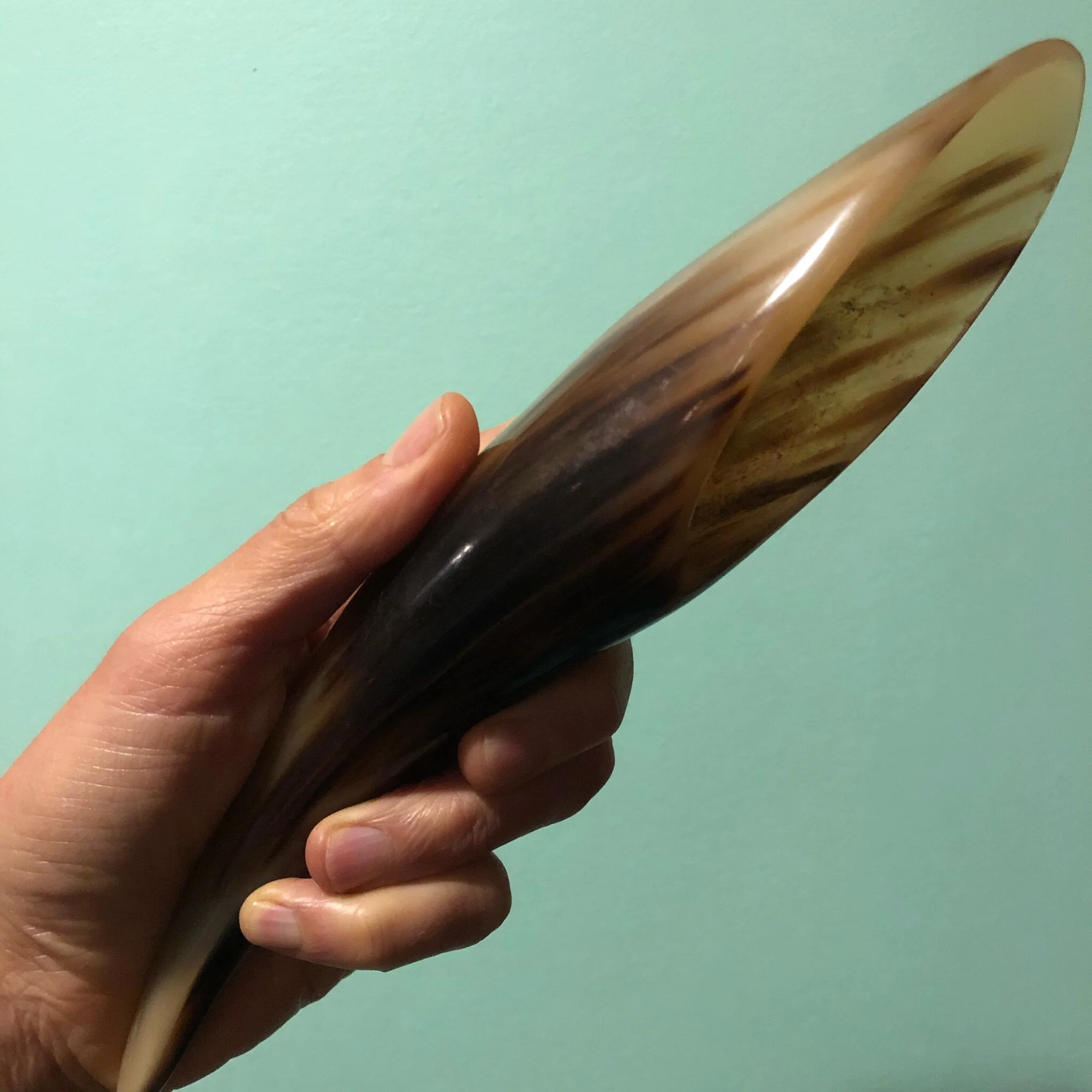
Gua sha is a unidirectional scraping technique using a variety of tool options such as a horn, ceramic spoon, jar lid, jade stone tools, or that perfect shell found on the beach. This one way scraping technique can be applied to nearly all parts of the body. Very often the head, neck, shoulders and back. But also very common on the arms, legs and feet. The general idea is to address the points of tension and scrape above, through and below.
The coloring on the body, aka the “sha” or “sand” that comes up as red petechiae, is also a guide to where the tension is being held. As acupuncturists we often scrape along the meridian pathways. Without that map of knowledge you use your intuition and follow the flow that feels good and relieving to you. Always use oil on the skin (almond, grapeseed, sesame do well) and find your flow!
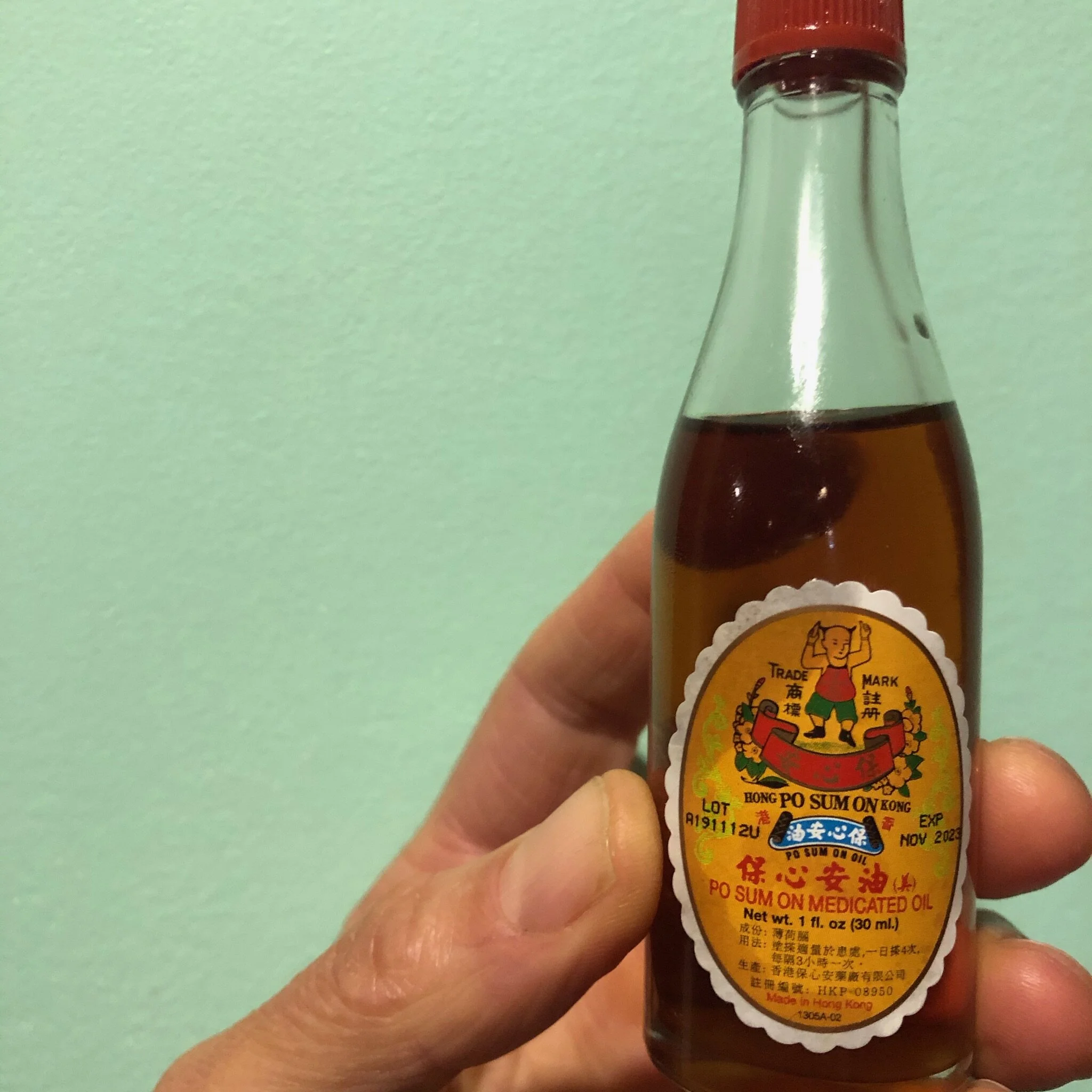
PO SUM ON OIL
If it hurts…. “Po sum on it”... literally… pour some of this oil in your palm and massage it into the muscles or joints that ache, burn, stab, or throb. Po Sum On Oil is extremely effective for the pains in our body from over work, over use, injury, minor tweaks, strains, bruises, chronic backache, or arthritis. Po Sum On has menthol in it, so the icy-hot feeling is part of its magic (always be sure to wash your hands very well post use! Touch nothing until those hands have been soap-y scrubbed!).
The ingredients here have the power again to nourish the body while creating more movement. Ideal for reducing pain while also promoting healing. So often this is what is recommended in substitution of icing the body.
The menthol and peppermint oil in Po Sum On cool yes, helping inflammation and swelling, and the cinnamon, licorice, and skullcap root warm and encourage movement at the same time, helping for true healing and tissue regeneration. For all movers and doers in the world, Po Sum On is a must-have.
It can be diluted with almond or another carrier oil for use as the base for cupping and gua sha as well. Or use undiluted directly on the body with great frequency during the day. Many times this is recommended before and after intense exercise, heavy training, or competition.
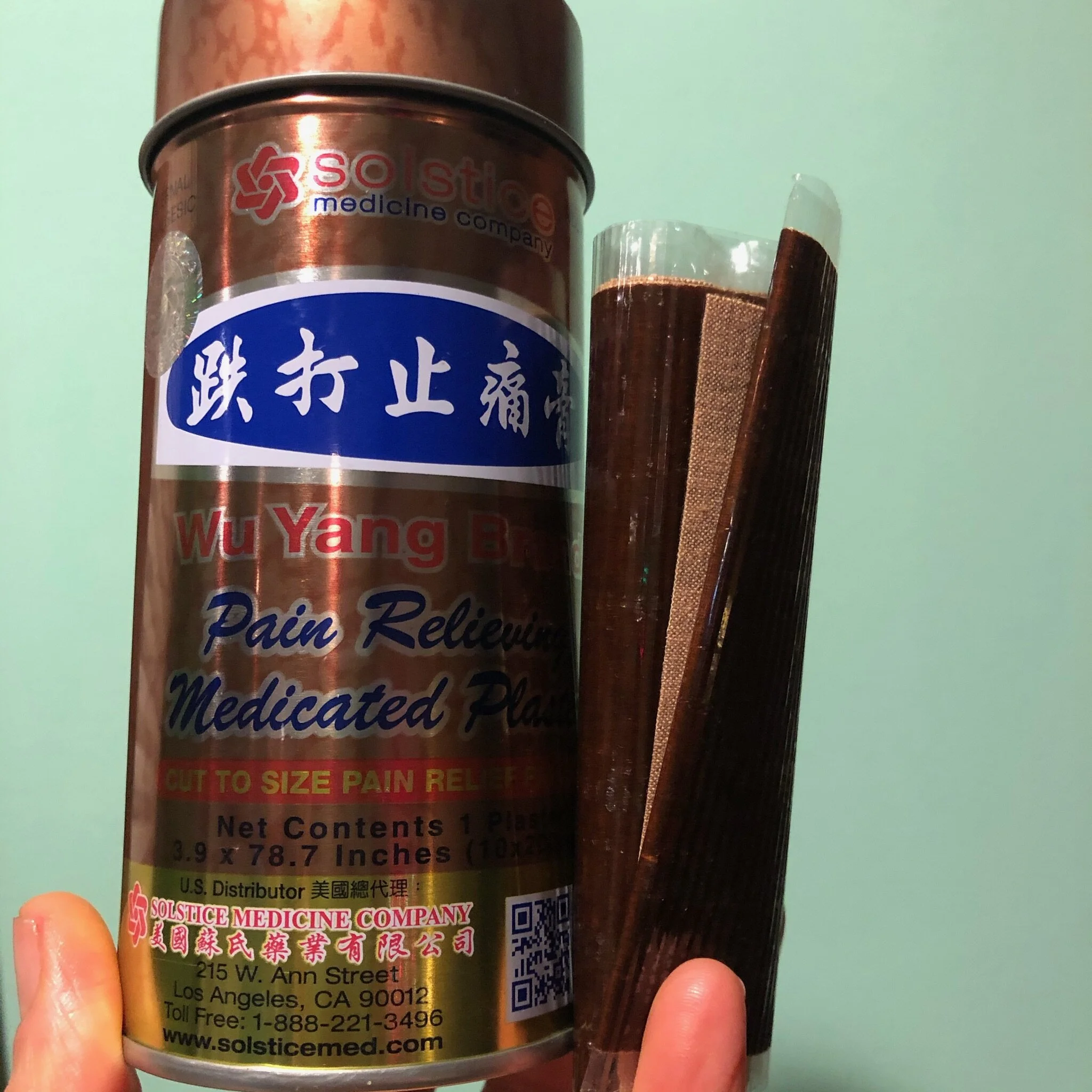
WU YANG PLASTERS
These sticky, smelly, tingly, amazing plasters are a go to for injuries and pain. Cut the plaster down to size, or make a few smaller ‘bricks’ or ‘stripes’ to cover a larger area of the body, and stick it on. The herbs inside the patch invigorate the blood, move blood stasis, clear heat, open the channels and collaterals, and also strengthens tendon and bone.
Helpful for both acute and chronic pain, but more often for acute injury or trauma. Each adhesive can stay on the skin for up to 8 hours and then remove. With these patches you often feel an instant cooling sensation and pain relief. Be mindful as sometimes the skin gets irritated if left on too long or worn during exercise/heat.
After cutting the big patch down to size, leave what remains in a sealed bag for freshness. Sometimes to ensure the Wu Yang patch stays put, I use a gentle strip of kinesio tape over the Wu Yang.
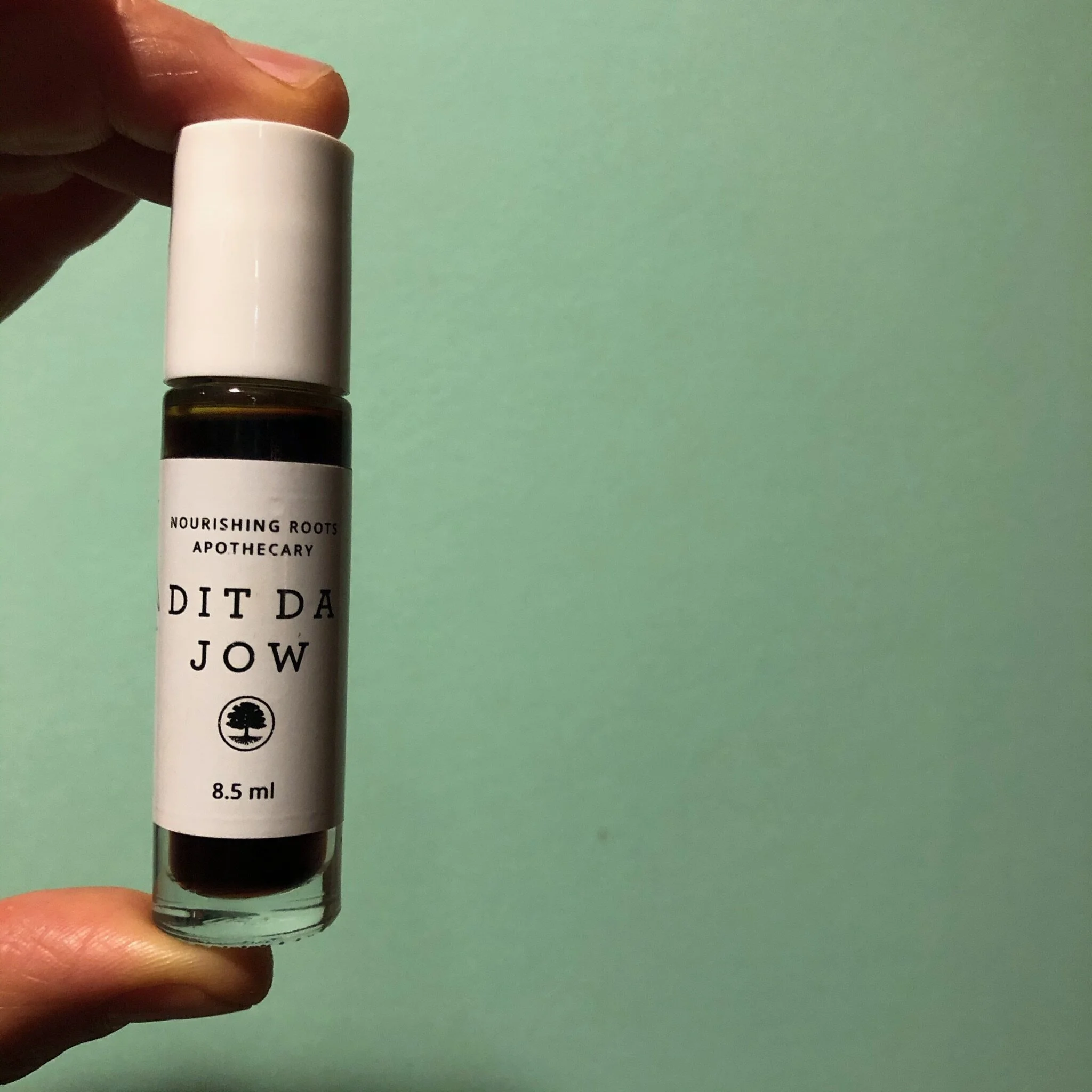
DIT DA JOW
This little cutie roll-on is your first aid go to for bumps and bruises.
This is an ancient formula used in martial arts originally as the go-to for pain relief. Dit Da Jow translates as “fall & hit wine” as it’s a concoction of Chinese herbs soaked in alcohol.
The formula reduces inflammation, promotes circulation, strengthens the sinews, and relieves pain from trauma and injury.
Not to be used with open wounds, but to be used (rolled in this sweet little bottle) on the affected area up to 6 times a day. So great for athletes, super active people, and busy kids. Keep in hand for the everyday aches and pains.
HEAT OR ICE??
In Chinese medicine we can see the value of both heat and cold. They are both beautiful and powerful elements, as well as natural extensions of the rotating seasons in nature. When it comes to healing, recovery, and regeneration we find healing inside movement. More movement is available through warmth/heat versus cold.
This is something super tangible we can even feel in the posture of our bodies. When we are cold we get tight in our neck and shoulders, stiff and stuck in our joints, slower moving and rigid. Consider the difference when we feel warm or hot. We have flow, we feel like we can stretch, bend, accelerate, and we also can soften and relax.
True healing asks us to find and talk to the ‘root’ or the true cause rather than just the ‘branch’ or the symptom. In modern sports medicine ice packs are so quickly used for symptoms of pain/injury almost as an instant bandaid rather than looking for the deeper cause/root and seeking true healing. When the body goes through an injury or trauma it simply knows what to do. Yes, it might swell, get hot, discolor, get tight, and our role can become treatment in alignment with the natural processes/response of the body. Rather than stopping or thwarting the process with ice or quick-acting pain relief that comes with immediate disconnect. Of course, being in pain is no fun, that’s the truth. But if we can pause, feel, listen, allow and work alongside the body's response we can experience true healing, recovery, and avoid more chronic long-term discomfort or dis-ease.
Sometimes in modern medicine, what seems to happen is that one line of thought or research becomes the one and only way and we all accept it as truth, without pause to listen to the body and experience the results, or lack thereof, ourselves. RICE (Rest, Ice, Compression, Elevation) was first presented in 1978 by Gabe Mirkin in his book Sportsmedicine Book. In an article written by the creator of the RICE method he retracts his statement and explains that icing negatively affects strength, speed, power, and agility in athletes. All of this reminds us how important flow is. And it instantly makes me think about why we so often begin our Pilates practice with the “100” to increase circulation and warm the entire body. Stoking our internal fires!